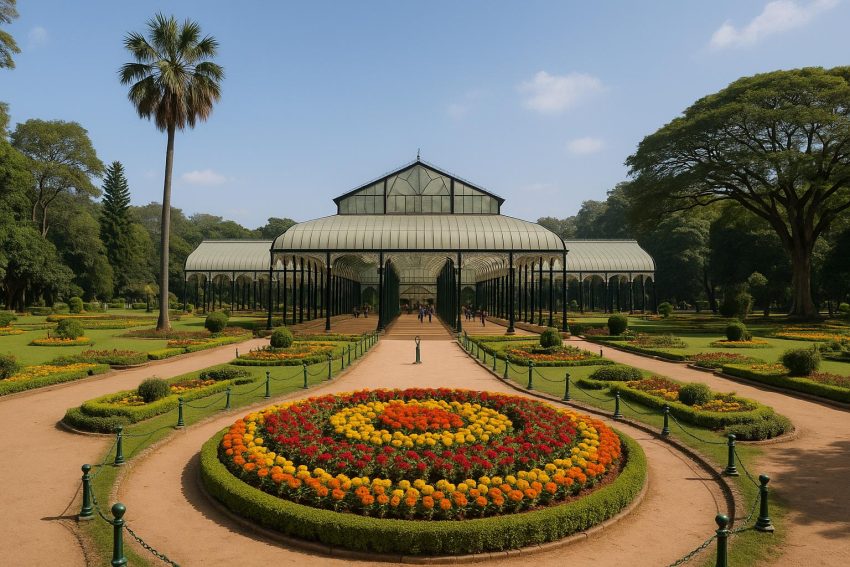
Overview of Lalbagh Botanical Garden
The Lalbagh Botanical Garden in Bangalore, India, stands as a notable attraction within the city due to its extensive and diverse plant collection and its historical significance. Founded in the 18th century, this garden has played a pivotal role in the botanical journey of India, reflecting the evolution of horticultural practices over centuries.
Historical Background
The foundation of Lalbagh Botanical Garden dates back to 1760 when it was first commissioned by Hyder Ali, the ruler of Mysore. His vision for a grand garden was further expanded by his son, Tipu Sultan, who contributed significantly to its growth. The garden was designed in the Mughal style, which is characterized by its symmetrical layouts, intricate designs, and lush, well-maintained lawns. This design style was prevalent during the period and can also be observed in other historical gardens across India. Over the years, Lalbagh has expanded its reach to cover over 240 acres, transforming it into one of the premier botanical gardens in India.
Unique Plant Collection
The garden boasts an exceptionally diverse variety of plant species. It is home to over 1,800 species of flora, featuring both native plants of the region and exotic species imported from various parts of the world. Among the outstanding features of Lalbagh is a rock formation that dates back over 3,000 million years, making it one of the oldest geological wonders in the world. This adds a unique geological aspect to the garden, attracting both botanists and geologists alike.
Lalbagh’s plant collection is meticulously maintained, ensuring that the garden remains a vibrant showcase of biodiversity. This extensive collection not only reflects the rich diversity of the plant kingdom but also serves as a living laboratory for botanical research, education, and conservation.
Glass House
An iconic feature within Lalbagh Botanical Garden is the Glass House. Inspired by the Crystal Palace in London, this impressive structure serves as the focal point for the garden’s most popular events: the biannual flower shows. These flower shows, held every January and August, are a highlight for both locals and tourists. They present a stunning array of plant species displayed in creative and intricate arrangements, attracting thousands of visitors, including horticulture enthusiasts and photographers, from across the globe.
The Glass House itself is a masterpiece of architecture, providing an elegant setting for these floral exhibitions. It serves as a symbol of Lalbagh’s commitment to promoting horticulture and its ongoing efforts to preserve plant diversity.
Accessibility and Amenities
Lalbagh Botanical Garden is conveniently accessible through various modes of transportation, including public transport, making it an easy destination for visitors from Bangalore and beyond. The garden offers a range of amenities that enhance the visitor experience. These include ample parking facilities, refreshment stalls offering a variety of snacks and beverages, and well-placed rest areas for relaxation amidst nature.
The garden is open to the public throughout the year, with a nominal entrance fee that ensures its upkeep and maintenance. Visitors planning a trip to Lalbagh can easily gather more detailed information by visiting the official Lalbagh Botanical Garden website, where they can find updates on events, visitor guidelines, and more.
Conclusion
In conclusion, Lalbagh Botanical Garden is not just a space for plant life; it is a vibrant cultural landmark in Bangalore. With its historical monuments, rich plant collection, and various horticultural activities, it offers a blend of educational and recreational value to its visitors. The garden serves not just as a place to appreciate natural beauty but also as a hub for learning and conservation. Whether one is a botany enthusiast, a casual visitor, or simply a lover of history and nature, Lalbagh Botanical Garden offers a refreshing escape to tranquility and beauty. With its impressive array of flora and its commitment to preserving both history and nature, Lalbagh Botanical Garden remains a testament to Bangalore’s rich cultural and natural heritage.