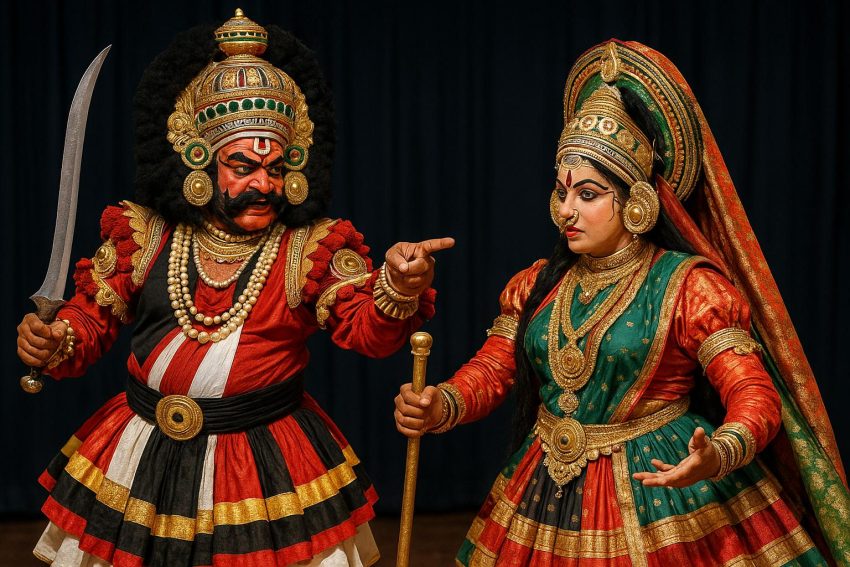
Introduction to Yakshagana
Yakshagana is an ancient and vibrant form of theater originating from the Indian state of Karnataka. This intricate art form is a harmonious blend of dance, music, dialogue, costume design, and stagecraft, collectively recounting epic mythological and historical tales. The performances primarily occur in the coastal districts of Karnataka, with some influence and presence in the neighboring Kerala regions. The wealth of tradition encapsulated in Yakshagana continues to captivate audiences, serving as a testament to India’s rich cultural heritage.
Historical Background
The roots of Yakshagana can be traced as far back as the early 16th century. However, certain components may indicate its origin links to pre-classical music, potentially coexisting with other South Indian art forms during its nascent stages. Over time, Yakshagana has maturely evolved into a distinct and highly regarded performance art style, predominantly illustrating the grand narratives of epic tales like the Ramayana, Mahabharata, and Bhagavat Purana.
Structure of a Yakshagana Performance
Yakshagana is renowned for its elaborate performances, characterized by their detailed and meticulous structures. Traditionally, a Yakshagana performance, or *mela*, takes place overnight, commencing in the evening and concluding at dawn. These performances involve a troupe of various artists fulfilling essential roles such as singers, musicians, and actors.
Music and Dance: The musical element of Yakshagana heavily relies on percussion instruments. Instruments like the *chenda* and *maddale* create rhythmic foundations, harmonized with the dynamic and expressive dance movements that carve out the narrative space.
Costumes and Makeup: The elaborate costumes of Yakshagana are a distinct and striking feature. These costumes incorporate vibrant colors and intricately designed headgear, ensuring that each character is portrayed vividly. Makeup plays a pivotal role, with detailed applications emphasizing facial features to communicate characters’ emotions and traits accurately.
Themes and Stories
Central to Yakshagana’s allure is its representation of themes and stories drawn primarily from Hindu mythology. These stories convey the rich cultural and spiritual ethos inherent in Indian traditions. While the core narratives are deeply rooted in tradition, the flexibility in expression permits innovative interpretations without deviating from the traditional storyline.
Improvisation: A notable characteristic of Yakshagana is the incorporation of improvisation by performers. Within the scripted framework, actors often employ spontaneous dialogue, enriching the performance and showcasing their connection with the audience.
Preservation and Modern Influence
Over the centuries, Yakshagana has experienced fluctuating levels of practice and popularity. Key efforts by cultural institutions and passionate enthusiasts have been integral to preserving Yakshagana’s core elements, adapting its timeless techniques to contemporary stages without losing its essence. Advances in performance may include translations into local languages, expanding its reach to a broader audience while still maintaining its traditional narratives and charm.
A sustained interest in Yakshagana among younger generations, alongside its incorporation into educational curricula, ensures the longevity and continuity of its legacy. As a dynamic emblem of India’s rich cultural tapestry, Yakshagana underscores the vital importance of preserving traditional arts in a world becoming swiftly globalized.
Yakshagana is more than just a theatrical performance; it is a vivid expression of cultural storytelling that bridges the past with the present. With each vibrant portrayal, the essence of timeless stories is preserved, leaving a lasting imprint on both performers and audiences alike, perpetuating cultural vitality and tradition for future generations to cherish.