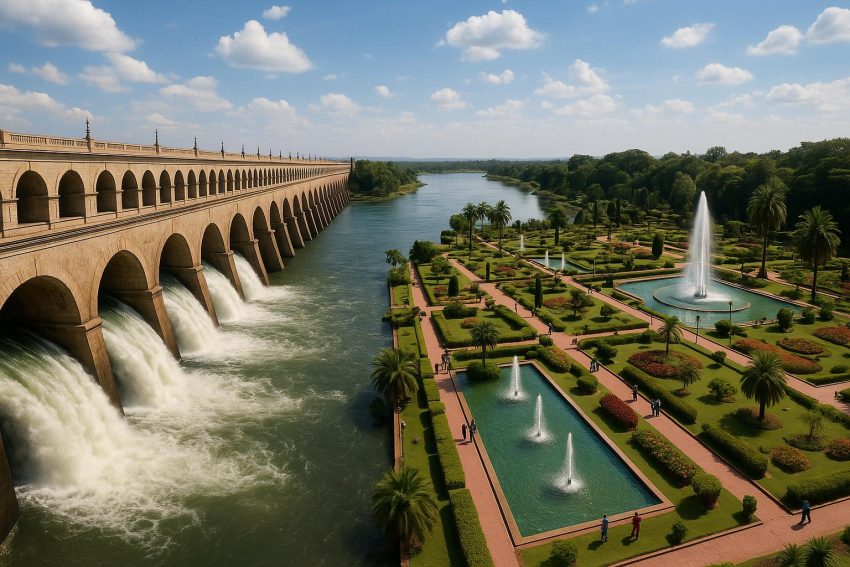
The KRS Dam, formally known as the Krishna Raja Sagara Dam, stands as a significant landmark in the Mandya district of Karnataka, India. Named in honor of the esteemed Maharaja of Mysore, Krishna Raja Wadiyar IV, this dam stretches across the mighty Cauvery River. It represents a remarkable feat of engineering and is an indispensable resource for both agriculture and water supply in the region.
Construction and Specifications
The construction of the KRS Dam was completed in 1931, under the expert guidance of the illustrious engineer Sir M. Visvesvaraya. His visionary prowess and dedication ensured that this massive project, despite being an engineering challenge, came to fruition successfully. The dam has an impressive height of approximately 130 feet and extends over a length of 2,620 meters. Such dimensions place it among the largest reservoirs in the country. With a storage capacity of around 49.45 billion cubic feet, the reservoir plays a multifaceted role, facilitating irrigation, supplying drinking water, and generating electricity.
The wall of the dam, designed with attention to detail and structural integrity, accommodates a series of sluice gates. These gates regulate water flow, ensuring optimum management of this vital resource. The construction utilized a mix of local and imported materials, coming together seamlessly to create a structure that has withstood the test of time.
Significance and Utility
The role of the KRS Dam in supporting agriculture is nothing short of pivotal. It is the backbone of irrigation in the region, providing water to more than 120,000 hectares of agricultural land across Mandya, Mysore, and adjacent districts. This has not only ensured food security but has also fostered economic stability for farmers and the local agrarian community.
In terms of water supply, the KRS Dam is a critical source for the cities of Mysore and Bangalore. This potable water supply is essential for the sustenance of urban populations, contributing substantially to public health and hygienic standards.
Additionally, the dam’s capacity for hydropower generation furthers its significance, addressing local electricity needs and supporting both residential and industrial consumption. The integration of these utilities highlights the dam’s role in promoting economic development while facilitating environmental sustainability.
Brindavan Gardens: A Celebrated Landscape
Located just below the KRS Dam are the world-renowned Brindavan Gardens. This locale has emerged as a celebrated tourist destination, attracting visitors from across India and even globally. Renowned for their orderly and symmetric design, the gardens represent an epitome of aesthetic charm combined with horticultural prowess.
Design and Features
Spreading across 60 acres, the Brindavan Gardens are a picturesque landscape modeled in the terraced Mughal style. The entire park is an eclectic blend of lush lawns and flourishing flowerbeds interspersed with vibrant sculptures, providing a serene ambiance for all visitors. The gardens are a living canvas painted with the colors of carefully curated flora, embodying immense botanical wealth.
One of the most awe-inspiring features of the gardens is the illuminated musical fountain. This section captivates spectators with its well-choreographed shows displaying a symbiotic dance of water and light. Each evening, the rhythmic interplay of sounds and luminous visuals transforms the garden into a magical tapestry of kaleidoscopic wonder, offering audiences an unforgettable sensory experience.
Tourism and Accessibility
The Brindavan Gardens are accessible throughout the year, welcoming visitors to enjoy its natural splendor at any time. However, the garden is particularly lively during the evenings when the musical fountain is in operation, drawing large crowds eager to witness the spectacular show. For those planning a visit, details on visiting hours, shows, and seasonal events can be found on the Mysore Tourism Official Website.
The gardens not only serve as a symbol of recreational delight but also contribute greatly to the local economy. They stand as a cultural hub, drawing tourism that supports local businesses, from artisans to hospitality providers. Their influence complements the pragmatic purposes of the KRS Dam, enriching the socio-economic fabric of the region.
Conclusion
Collectively, the KRS Dam and Brindavan Gardens epitomize a perfect synergy of utilitarian functionality and aesthetic elegance. The dam, on one hand, showcases the brilliance of engineering in developing and managing vital resources such as water and energy. On the other hand, the gardens reflect human creativity and artistry in crafting serene and visually pleasing environments.
Together, they provide a dual narrative: one of resourcefulness and innovation, and the other of cultural and environmental appreciation. For both locals and travelers, they offer an insightful glimpse into how man-made structures can harmoniously coexist with natural beauty, promoting an era where functionality embraces aesthetics. As monuments of both progress and pleasure, they continue to inspire, ensuring that utility and creativity can indeed flourish side by side.