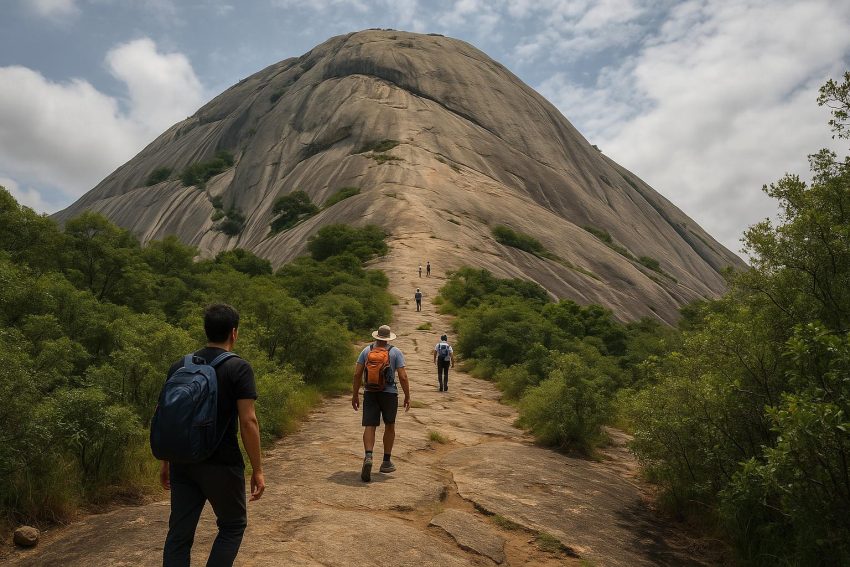
Introduction to Savandurga Trek
The Savandurga Trek is a popular trekking destination located approximately 60 kilometers west of Bangalore in Karnataka, India. Renowned for its substantial monolithic rock formation, Savandurga is deemed one of the largest in Asia. Its unique blend of adventure, natural beauty, and historical significance renders it a favored choice for trekkers and nature enthusiasts alike.
Geographical Significance
Savandurga’s prominence stems from its considerable elevation of about 1,226 meters (or 4,030 feet). Situated on the Deccan Plateau, it consists primarily of two hills: the *Karigudda*, or “Black Hill,” and the *Billigudda*, or “White Hill.” The rugged terrain, characterized by striking granite rocks and sparse vegetation, creates a picturesque backdrop for trekking. This geographical setting not only offers challenges to adventurers but also provides stunning views and opportunities for photography.
Flora and Fauna
The region surrounding Savandurga is replete with diverse flora and fauna. The indigenous vegetation predominantly consists of dry deciduous forests featuring species such as eucalyptus, neem, and various shrubs. These plant species create a rich habitat for an array of wildlife, including leopards, sloth bears, and numerous bird species. This biodiversity makes the area a point of interest for wildlife enthusiasts and researchers, offering a chance to observe rare species in their natural habitat. Bird watchers will find delight in spotting different species of birds that frequent this region.
Trekking Routes
Savandurga offers two primary trekking routes, each with its distinct features and level of difficulty:
Billigudda Trail
The *Billigudda Trail* is the more popular and accessible route, often chosen by beginners and casual trekkers. Known for its scenic beauty, this trail is marked for easier navigation. Trekkers following this path will experience an exhilarating journey through caves and steep stretches. Typically, the ascent takes about 2-3 hours, depending on the individual’s pace. Along this route, trekkers can enjoy panoramic views and the serene environment that epitomizes the essence of trekking at Savandurga.
Karigudda Trail
In contrast, the *Karigudda Trail* represents a more challenging and less frequented path that appeals to seasoned trekkers seeking solitude and adventure. Due to its unmarked trails and dense foliage, it requires the guidance of a knowledgeable guide. Those who choose the Karigudda trail are rewarded with a more intimate connection with the environment, making the effort worthwhile. This trail is ideal for experienced trekkers who appreciate navigating through terrain that calls for both physical and mental endurance.
Historical Significance
Savandurga is imbued with historical significance, primarily due to the ancient fortifications located atop the hills. The fort, which dates back to the reign of Kempe Gowda II, was constructed as a defensive stronghold to deter invading forces. Though now in ruins, the fort’s stone walls and bastions paint a vivid picture of the past and provide panoramic views of the surrounding landscape. Exploring these ruins offers trekkers not only a glimpse into history but also a deeper appreciation for the strategic importance of this location throughout the ages.
Preparation and Tips
Preparation is essential for a successful trek at Savandurga. Trekkers should ensure they carry sufficient water, snacks, and a first-aid kit. Appropriate trekking shoes and comfortable clothing are vital in navigating the rocky terrain efficiently and safely. Beginning the trek early in the morning is advisable to avoid the midday heat and enhance safety during the climb. Additionally, checking the local weather conditions before setting out is crucial to ensure preparedness for any weather-related challenges.
Safety Measures
Safety is of utmost importance when trekking in Savandurga. It is highly recommended to trek in groups and inform someone trustworthy about your planned route to ensure safety in case of any unforeseen circumstances. Avoid trekking during the monsoon season, as the rocks are prone to becoming slippery, which raises the risk of accidents. Lastly, it is imperative to respect the environment by maintaining cleanliness and not disturbing the natural ecosystem, ensuring that the pristine beauty of Savandurga can be preserved for future visitors.
For more information on trekking in Karnataka and other destinations similar to Savandurga, you can learn more about trekking in Karnataka.