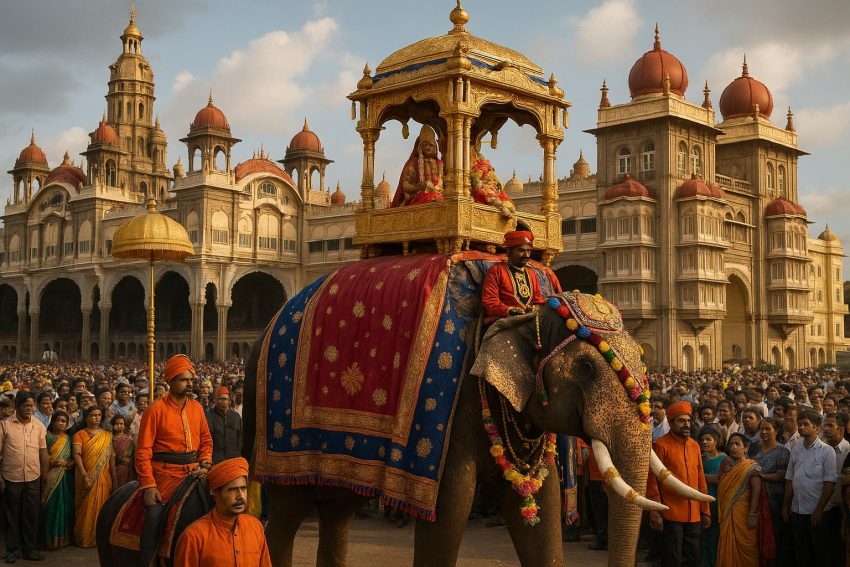
Overview of Mysore Dasara Festival
The Mysore Dasara, also referred to as Nadahabba, which translates to the state festival, stands out as a significant celebration organized annually in Mysore, Karnataka, India. This prominent 10-day festival reaches its pinnacle on Vijayadashami, a day that symbolizes the victory of good over evil, embodying the very essence of the event. This observance forms a crucial component of the traditional Hindu festival of Navaratri, celebrated to honor Goddess Durga, who represents power and the triumph of righteousness.
Historical Background
Tracing the origins of Mysore Dasara, it spans back several centuries, with its enduring tradition sustained under the stewardship of the Wodeyars of Mysore. The festival is believed to have gained considerable prominence during the reign of Raja Wodeyar I in 1610. Historically, it is linked to the recapture of the Mysore kingdom from the ruling Vijayanagara Empire, reflecting a broader narrative of justice prevailing. The continuation of this celebration underlines the cultural and historical significance held by this event within the region, solidifying its place in the cultural calendar of Karnataka.
Main Attractions
During this vibrant festival, Mysore transforms with mesmerizing lights and splendid decorations. The city comes alive, attracting thousands who gather to witness the grandeur in various forms. Several key attractions form the core of this festival:
Jumbo Savari
The Jumbo Savari, or the royal procession, is considered one of the festival’s pinnacles. This extravagant parade features elephants adorned with magnificent ornaments, leading the procession with the statue of Goddess Chamundeshwari, known as the deity of the Wodeyars, seated atop the lead elephant. Spanning from the Mysore Palace to Bannimantap, this procession represents a visual feast to attendees, delivering an unmistakable royal charm and cultural spectacle.
Dasara Exhibition
Parallel to the on-ground festivities, the Dasara Exhibition unfolds annually near the Mysore Palace grounds. This exhibition serves as a multifunctional platform showcasing art, culture, and commercial endeavors. It enables local artists, craftsmen, and businesses to present and sell their products, contributing to both cultural sustainability and economic continuity. For further insights, access to more detailed information can be found on the official Mysore Dasara website.
Cultural Programs
The cultural dimension of the Mysore Dasara manifests through various programs spread across the festival duration. Music, dance, and drama performances happen at multiple venues, captivating audiences with the richness of cultural expression. These events embody the essence of Karnataka’s cultural diversity, with folk performances being particularly central to engaging both local residents and tourists alike. The artistic expressions offer a window into the socio-cultural heritage of the region, fostering cultural appreciation and understanding.
Significance and Rituals
The Mysore Dasara extends beyond mere festivity, encompassing deep religious observance and celebration. During the festival, daily rituals and ceremonies unfold, particularly at the Chamundeshwari Temple, a spiritually significant site. The culmination of this celebration comes with Vijayadashami, marking the day for idol immersions and final processions. This day holds substantial mythological importance, illustrating the annihilation of the demon Mahishasura by Goddess Durga, underlining the festival’s central theme of the triumph of good over evil.
Conclusion
In conclusion, the Mysore Dasara offers a multifaceted celebration representing not only Karnataka’s cultural richness but also echoing its historical antecedents. The grandeur and vibrancy inherent in the festival draw countless visitors from across the globe, closely linking it with the cultural tourism of Karnataka. Its significance extends beyond celebration, painting a picture of a region deeply entrenched in its traditions, yet welcoming to all who wish to experience its cultural ethos.